Ask a Gen Z car owner how he picked his last mechanic and you'll rarely hear "I called around." He watched a forty-second video of someone popping a hood, read a dozen reviews in ninety seconds, and sent a text to confirm a time, all before anyone on your team heard a human voice. Most shop marketing still assumes a phone call is step one. For the generation now aging into needing real repairs instead of just oil changes, the call is usually step four, if it happens at all. That's not a quirk to wait out until these customers "grow up and start calling like everyone else." It's the booking behavior your shop needs to match now, without tearing up the systems that still work fine on every other customer walking through your door.
Why Gen Z won't call your shop first.
Every generation researches a mechanic before trusting one with their car. What changed with Gen Z is the order of operations and the format of the proof. Older customers often start with a phone call, describe the noise, and let a conversation build trust. Gen Z starts with a screen. They'll scroll your Google Business Profile reviews, skim your Instagram or TikTok for actual footage of the shop, and compare your pricing transparency against two or three competitors, entirely without talking to anyone. By the time a call or text happens, the decision is mostly already made. A shop that only shows up as a name and an address on a map has already lost that silent comparison, regardless of how good the actual work is.
This generation also carries a default skepticism toward claims it can't verify itself. "Honest and affordable" on a website means nothing to someone who has grown up assuming every brand says that. What lands instead is unscripted, slightly rough footage of real work happening, a comment section with actual back-and-forth, and reviews that read like a real person wrote them under time pressure, typos and all. Polish reads as an ad. Rough footage reads as proof.
Gen Z makes the shop decision before the first call or text happens, based on video, reviews, and pricing clarity they found on their own. Everything in this guide exists to win that silent comparison.
None of this means older customers stopped mattering or that your existing systems are broken. It means a second, younger buying pattern is forming alongside the first one, and a shop that only serves the first pattern is quietly invisible to a growing share of the cars that will need real work in the next five to ten years. Winning this group early, while they're still forming which shop they trust, is worth more than winning them back later after a competitor got there first.
There's also a loyalty window here that most shops never think about. The first mechanic a young driver trusts tends to be the one they stick with for the next decade of oil changes, brakes, and the eventual bigger jobs once the car has real miles on it. A customer who finds you at twenty-two because of a reviews-first search and a quick video is a customer you can realistically keep until the car they're driving now is long gone and replaced twice over. Treating this segment as a minor side effort rather than a long-term acquisition channel undervalues exactly how much lifetime revenue is sitting in getting this right early.
Five plays that actually reach them.
None of these require a marketing department or a film crew. They require consistency and a willingness to let the work look like real work instead of a commercial.
Play 1: Film the work, not the ad
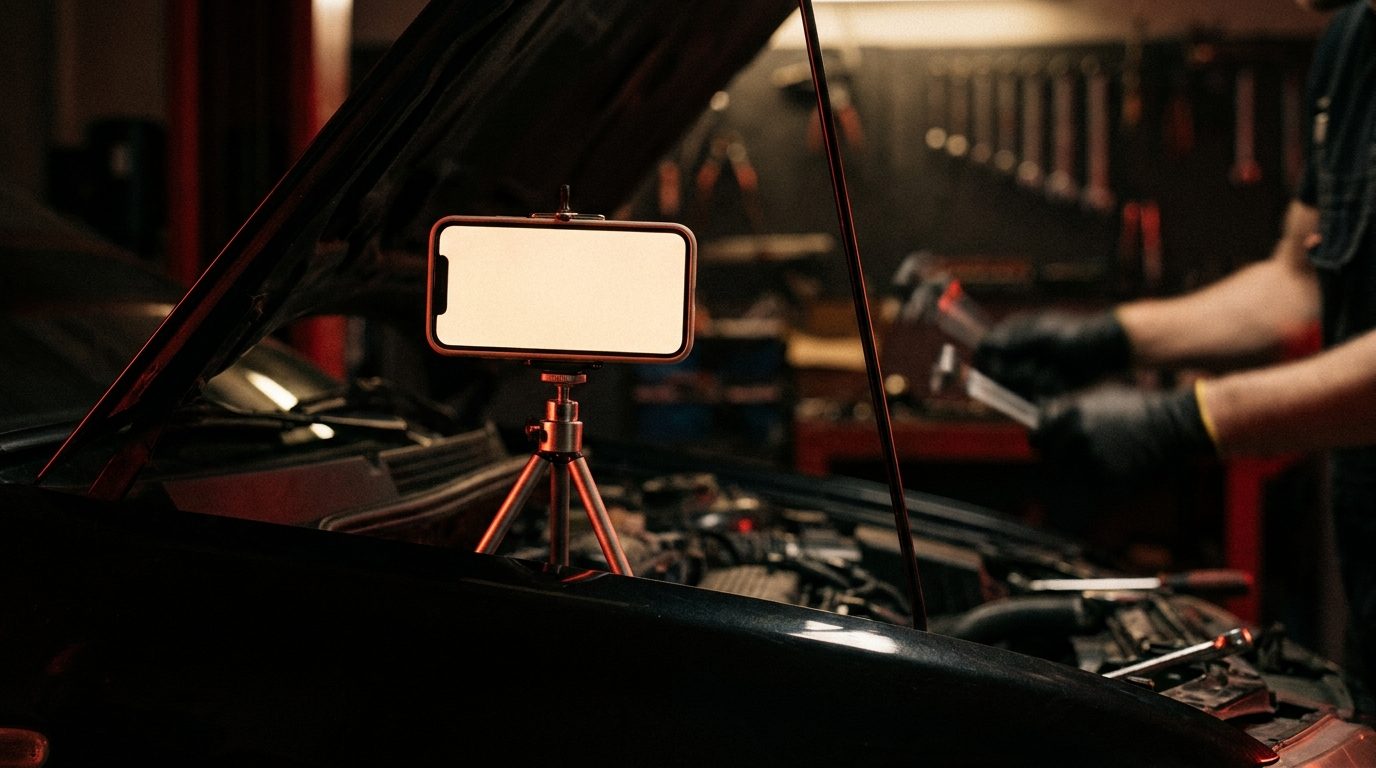
Skip the scripted testimonial and film what's actually happening in the bay: a worn brake pad next to a new one, a before-and-after on a headlight restoration, a thirty-second answer to "why does my car make that clicking sound." One phone, one tripod, and a quiet minute between jobs is the entire production budget. Keep the audio raw, shop noise and all, rather than layering trending music over everything. A viewer who's trying to judge whether you're a real shop reads ambient bay noise as more credible than a polished soundtrack, not less. Our breakdown of video marketing for auto repair shops covers the exact five clips most shops can film in a single afternoon.
Play 2: Let them text first
A dedicated business texting number, answered by whoever is at the counter, removes the single biggest friction point for a generation that treats an unscheduled phone call as mildly hostile. Quote questions, appointment confirmations, and even "can you look at this noise" photos all move faster over text than through a voicemail that doesn't get checked until lunch. A customer who can send a photo of a dashboard warning light and get a same-hour reply has already experienced the kind of responsiveness that turns a one-time repair into a repeat customer.
Play 3: Show the price before they ask
A range for common jobs, oil changes, brake pads, alignments, posted on your website and Google Business Profile removes the single biggest reason a price-sensitive, research-first customer bounces to a competitor's site instead of calling yours. You don't need exact numbers for every repair. You need enough honesty that nobody feels like pricing is a secret they have to call to unlock. Shops that make this change typically notice fewer "how much do you charge" texts and calls from people who were never going to book anyway, and more inquiries from people who already know your range and are ready to schedule.
Play 4: Make reviews the sales pitch
This generation trusts a stranger's three-sentence review more than any claim your own website makes about itself. Ask every customer under roughly thirty-five for a review at pickup, specifically, and make the request personal rather than a generic card in the bag. Volume matters less than recency here, a steady trickle of new reviews each week signals an active, trusted shop far better than a large pile of reviews that stopped three years ago. Our full reviews strategy for auto repair shops covers the request script and timing that gets this to actually happen instead of staying a good intention.
Play 5: Show up where they already scroll
Instagram Reels and TikTok reach this age group more reliably than a radio spot or a mailer ever will, and the same vertical clip posts to both with one upload. You're not trying to go viral. You're trying to be the shop whose face and garage a local Gen Z driver already recognizes before their check engine light comes on. Consistency beats production value every time in this format, a shop posting two rough clips a week for three months builds more recognition than one highly produced video posted once and forgotten.
Free Gen Z Marketing Audit
Not sure if your shop even shows up for younger drivers?
We'll check your Google listing, reviews, and social presence for the exact gaps keeping Gen Z searchers from finding you, free.
Get My Free Gen Z Marketing Audit →Doing this without alienating everyone else.
The fastest way to lose a loyal fifty-five-year-old customer is to replace the phone line with a chatbot and call it progress. Nothing in this guide asks you to do that. Every play above is additive: the texting number sits alongside your existing phone line, the video content sits alongside your existing word-of-mouth reputation, the online pricing sits alongside the in-person conversation a customer still gets at the counter. A customer who wants to call and talk through a repair in detail should still get exactly that experience, unchanged.
Where shops actually get this wrong is tone, not channel. Filming real repair footage is good marketing for every age group, long-time customers like seeing the shop they already trust get busier too. But chasing trend audio or forced slang in captions reads as try-hard to everyone, including the Gen Z audience it's aimed at. Keep the voice the same one you'd use describing a repair to a customer's face: direct, plain, a little dry. The format changes. The voice doesn't.
Staff buy-in matters more than any tool here. Whoever answers texts needs the same authority and training as whoever answers the phone, so a quote given over text matches a quote given over the counter. A mismatch between channels is what actually erodes trust across every age group, not the channel itself.
Worth saying plainly to your team: nobody is asking a sixty-year-old service advisor to start talking like a TikTok caption. The videos and texts are simply another window into the same shop, run by the same people, giving the same honest answers they'd give in person. A longtime customer who happens to see one of these clips in a shared link from a younger family member should recognize the shop immediately, not wonder if ownership changed.
Closing the loop with paid ads.
Organic video, texting, and reviews build the foundation, but they take time to compound, especially for a shop starting from zero social presence today. Paid ads close that gap immediately by putting your shop in front of this exact audience before they've started the research cycle on their own. Meta's detailed targeting and Google's in-market and affinity audience segments both let you reach drivers in the age range and geography that matches your bay, and short vertical video, the same clips from Play 1, consistently outperforms static image ads with this demographic because it matches the content format they already expect in their feed.
Retargeting is the other half worth setting up early. Once a younger visitor lands on your reviews page or pricing page from an organic search or a social post, a modest retargeting budget on Meta and Google keeps your shop in front of them through the rest of their comparison process, which for this audience often spans several days and several competitor tabs before a decision gets made. Direct response campaigns built this way can start producing calls, texts, and booked appointments within 24 to 48 hours of launch, because the targeting and creative are matched to how this specific buyer actually behaves instead of copying whatever campaign structure worked on a different generation entirely.
A simple version of this looks like: a short vertical video showing a common repair, a Google Business Profile landing page with clear pricing and recent reviews, and a retargeting audience built from anyone who watched at least half the video or visited the pricing page without booking. Shops running this kind of setup for the first time typically keep the starting budget modest, enough to reach a few hundred local, in-range viewers a week, while the creative and audience get dialed in before scaling spend further.
Short vertical video ads, built from the same clips you're already filming, paired with retargeting on Meta and Google, reach Gen Z searchers in the format they expect and can produce booked appointments within 24 to 48 hours.
Build The Audience
Let us build your Gen Z ad targeting from scratch.
We'll build the video creative, set the audience targeting, and launch the retargeting sequence, so younger drivers in your area actually see you first.
Get My Free Gen Z Marketing Audit →Rolling it out without adding headcount.
None of this requires a new hire, even for a one or two-bay shop running lean. Batch the filming: pick one slower afternoon a week and shoot three or four short clips back to back, enough to post the rest of the week without touching a camera again until the next batch. Template the text replies for the questions that repeat constantly, quote ranges, hours, what to bring, so answering texts takes seconds rather than a fresh typed-out response every time.

Build the review ask into the checkout process itself rather than treating it as a separate task, a single line from whoever hands back the keys, "mind leaving us a quick review, it genuinely helps other people find us." Reuse the same video creative everywhere it fits: organic Instagram and TikTok posts, paid ad creative, even looping quietly on a screen in your waiting area for the customers sitting right in front of you. One short afternoon of filming can support an entire month of organic posts and ad creative if you treat the footage as a reusable asset instead of a one-time post.
Track what's actually working the same way you'd track any other channel: ask new customers under thirty-five how they heard about you, and note it. Within a few months the pattern tells you whether to double down on video, lean harder into paid retargeting, or shift effort somewhere else entirely, rather than guessing based on how the posts feel to make.
A realistic first thirty days looks like this: week one, film the first batch of clips and set up the texting number. Week two, post the first videos, turn on the pricing page updates, and start the review-request script at checkout. Week three, launch a small retargeting campaign aimed at anyone who's visited your site or watched a video. Week four, review which clips got watched all the way through, which review requests actually converted, and adjust the next batch accordingly. Nothing in that sequence requires new equipment or a new hire, just a consistent hour or two a week that compounds the same way every other piece of this guide does.
This isn't a separate marketing strategy running alongside your real one. It's the same reputation, pricing honesty, and quality of work your shop already has, shown in the format and channel a specific and growing segment of drivers actually trusts. Our full auto repair marketing guide covers how this layers into the broader SEO, reviews, and paid ads system every shop needs regardless of who's behind the wheel.
Free Gen Z Marketing Audit
Stop losing younger drivers to a shop with better video.
We'll show you exactly what to change on your Google listing, reviews, and social presence to start showing up for Gen Z searchers right now.
Received
Thanks. Talk soon.
We'll reach out within 24 hours with your custom 90-day roadmap.
Frequently asked questions.
Does marketing to Gen Z mean I ignore my older customers?
No. Nothing in this guide replaces your phone line, your in-person counter, or the relationships you already have with long-time customers. You're adding a texting option, short video content, and review-first proof on top of what already works, not tearing it out. A customer who prefers calling can still call. A customer who prefers texting now has that option too.
Do I need to be on TikTok to reach Gen Z car owners?
Not necessarily. Instagram and YouTube Shorts reach plenty of this age group, and the same vertical video works across all three with one upload. Pick whichever platform your actual customers already use, which you can find out by asking a handful of younger customers directly, and post consistently there rather than spreading thin across every app at once.
Will text-based booking actually work for a one-location shop?
Yes, and it scales down to a single phone just as easily as it scales up. A dedicated business texting number, even a free one through your existing phone system or a low-cost texting app, lets one person answer quote questions and confirm appointments in the gaps between customers at the counter, without hiring anyone new.
How fast will marketing to Gen Z actually show results?
The organic pieces, video content, texting, review requests, compound over weeks and months like any content effort. The paid layer moves faster. Meta and Google direct response campaigns built around this audience's actual behavior can start producing calls, texts, and booked appointments within 24 to 48 hours of launch, once the organic groundwork gives that traffic somewhere credible to land.