
BMW and Mercedes owners do not shop for a mechanic the way a sedan owner shops for an oil change. They research before they call, they look for brand-specific credentials, and they will drive past three generalist shops to reach the one that proves it actually knows their car. Most European-capable independent shops market themselves exactly like every other repair shop in town, the same coupon, the same "we fix everything" headline, the same campaign that treats a $4,500 transmission job like a $40 brake light swap. That mismatch is costing you the highest-ticket customers in your market, and it is fixable with a different approach to targeting, trust, and offer design, not a bigger budget.

- 01Why marketing like a general shop costs you the best customers
- 02Who is actually searching for a European specialist
- 03The trust signals that convert a high-ticket searcher
- 04Building the Google and Meta campaigns that target by brand
- 05Offers and creative that don't attract coupon shoppers
- 06Turning one premium appointment into a lifetime of service
- 07Frequently asked questions
Why marketing like a general shop costs you the best customers.
Open most European-capable shops' ad accounts and you will find the exact same campaign a general repair shop runs: a 15 percent off coupon, a broad "auto repair near me" keyword list, and a Facebook ad showing a wrench and a smiling technician with no mention of a single make or model. That campaign is not wrong for a general shop. It is wrong for a shop sitting on the kind of average repair ticket a BMW or Mercedes customer brings in, because it is built to win a price comparison that your best customers are not actually running.
A European car owner comparison-shopping a $700 diagnostic and repair is not deciding between your shop and a $20-off coupon from the shop across town. They are deciding between your shop, the dealership, and maybe one other specialist, and the decision hinges on whether you can prove you actually know their car, not whether you are the cheapest option on the list. A generic campaign built around price competes for exactly the wrong comparison, and it tends to attract exactly the wrong customer, the one chasing the lowest number rather than the shop with the deepest German or Japanese-import expertise.
The economics make the mistake more expensive than it looks. A general repair shop might see a $150 to $250 average ticket. A European specialist with the right mix of maintenance, diagnostic, and repair work routinely sees two to three times that, often north of $600 once a real diagnostic or a timing chain, suspension, or electrical issue is involved. Marketing that higher-value customer with the same low-intent, price-driven playbook as a $20 oil change leaves most of that ticket difference sitting on the table, because the campaign never earns the right to charge for the expertise it actually has.
| Factor | General Shop Marketing | Euro-Specialist Marketing |
|---|---|---|
| Primary offer | Percentage off or flat-rate discount | Free diagnostic or transparent inspection |
| Keywords targeted | Auto repair near me, oil change near me | Independent BMW specialist, Mercedes check engine light |
| Average ticket assumption | $150 to $250 | $400 to $900 or more |
| Trust signal emphasized | Price and convenience | Brand-specific certifications and equipment |
| Customer it attracts | Price-shopping, one-time visitor | Research-driven, repeat specialist client |
Free Euro-Specialist Ads Audit
See exactly how many BMW and Mercedes searches you're losing.
We'll map the brand-specific searches happening in your service area right now and show you what a targeted campaign could realistically book.
Get My Free Euro Shop Audit →Who is actually searching for a European specialist.
A driver typing "independent BMW specialist" or "Mercedes repair near me" has already filtered themselves. They are not casually searching for any mechanic, they have decided, consciously or not, that a dealership is too expensive and a generalist shop is too risky, and they are looking for the narrow middle option that understands their specific car without the dealer markup. That is a fundamentally different search intent than "auto repair near me," and it deserves a fundamentally different ad response.
This customer also researches longer before calling. Expect more time spent reading reviews, more comparison between two or three specialist shops, and more attention paid to whether a shop actually lists the brands it services rather than a vague "foreign and domestic" claim. They are also more willing to drive farther. A general repair customer usually picks the closest convenient option. A European car owner who has had a bad dealership experience or a botched repair at a generalist shop will often drive across town, sometimes across the metro, to reach a specialist they trust, which widens your addressable radius well beyond the three-mile zone a typical local campaign targets.
This customer is not comparison-shopping on price. They are comparison-shopping on proof that you actually understand their car, and the shop that makes that proof the easiest to find wins the appointment before the phone ever rings.
That shift in behavior should change your keyword list, your ad copy, and your geographic targeting radius all at once. A campaign built around "cheap auto repair" is invisible to this searcher, because cheap is not what they are solving for. A campaign built around brand-specific symptoms, a BMW N20 engine ticking on cold start, a Mercedes air suspension warning light, an Audi oil leak at the valve cover, speaks directly to the exact problem this customer is already trying to describe to a search bar at eleven at night.
The trust signals that convert a high-ticket searcher.
Price convinces a general repair customer. Proof of competence convinces a European car owner, and proof looks specific, not generic. A homepage claim of "ASE certified technicians" reads as a baseline expectation to this customer, not a differentiator, because every shop they are comparing you against says the same thing. What actually moves the decision is manufacturer-specific training, brand-dedicated diagnostic equipment that matches what the dealership uses, and a service history that shows real depth on the exact brand searched, not a generalist shop that happens to also work on European cars when asked.
Reviews carry more weight here too, but only the specific kind. A five-star review that says "fast and friendly" does nothing for a BMW owner deciding between you and the specialist two exits away. A review that mentions a specific repair, "diagnosed my X5's air suspension fault in twenty minutes after the dealer quoted me for a full system replacement," does the actual convincing work, because it proves depth rather than just general satisfaction. If your current review-generation system asks every customer the same generic "how was your visit" prompt, it is leaving this kind of specific, high-converting proof on the table. Our guide to building a review strategy for auto repair shops covers how to prompt customers for the detail that actually sells the next one.
A European car owner does not need to be convinced that you fix cars. They need to be convinced that you fix their specific car, which means every trust signal on your site and in your ads should name the brand, the system, or the symptom, never just "auto repair."
Loaner vehicles, shuttle service, and a genuinely transparent multi-point inspection with photos also carry outsized weight with this audience, because they signal a shop built around a longer, more involved relationship rather than a quick in-and-out. None of these trust signals require new equipment or new hires to start claiming. Most shops already have them and simply never put them in front of the exact searcher deciding whether to call the dealer back instead.
Building the Google and Meta campaigns that target by brand.
Google Search should be structured around brand and symptom, not generic repair categories. Build separate ad groups for each brand you specialize in, BMW, Mercedes, Audi, Volkswagen, each with its own keyword list built around the specific failures owners of that brand actually search for, and its own ad copy that names the brand directly. A generic "we work on all makes" ad loses to a competitor whose headline reads "Independent BMW Specialist" every time, because the specific claim reads as more credible even when the actual expertise is comparable.
High-ticket brand and symptom keywords cost more per click, typically landing in the $8 to $15 or higher range compared to the $3 to $8 a general repair shop pays, but the math still favors the specialist. A $12 click that books a $700 diagnostic and repair beats a $4 click that books a $150 oil change every time, and the searcher behind the expensive click already knows they need a specialist, which means your close rate on that click runs well above a generic repair lead.
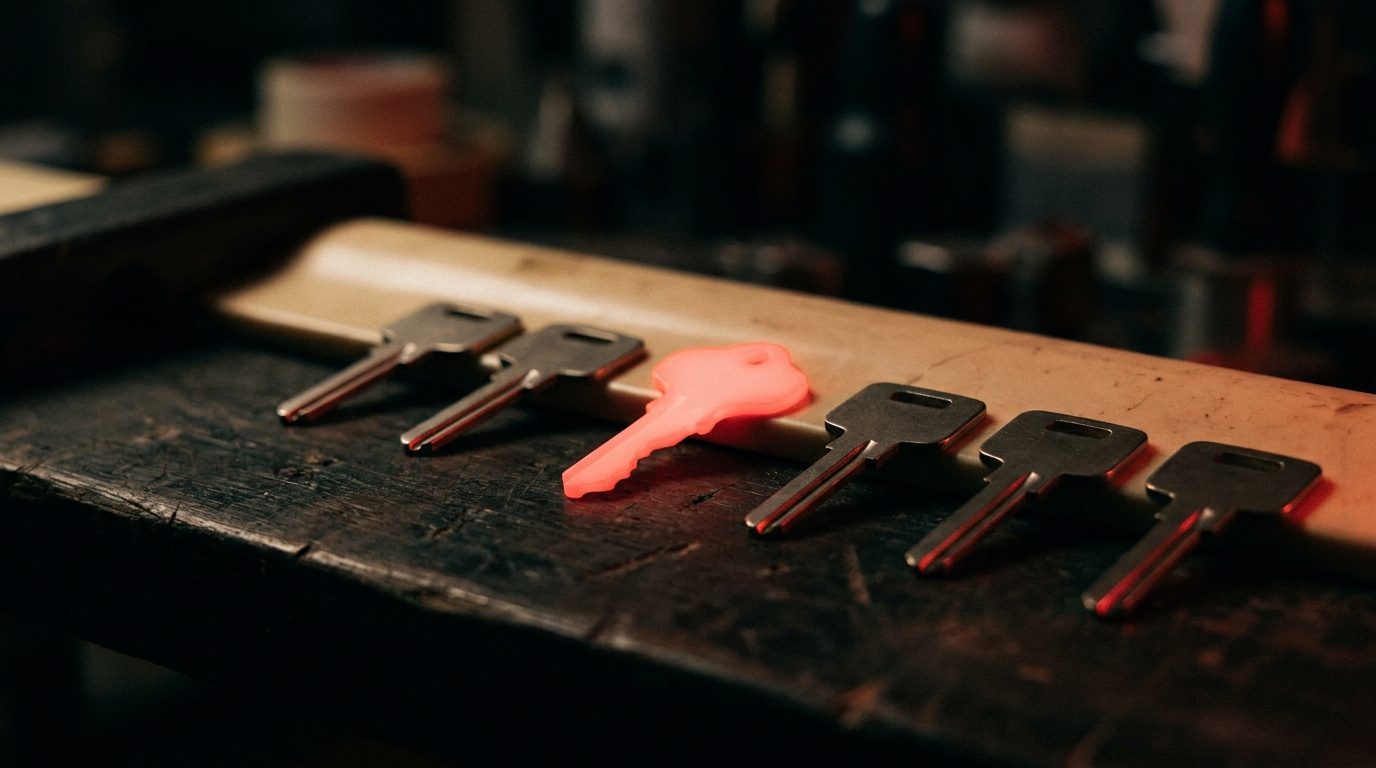
Meta plays the familiarity role rather than the active-search role. Build audiences around interest and behavior signals tied to European and luxury vehicle ownership within your service radius, and run creative that reinforces your specialty, a close-up of a brand-specific diagnostic tool, a before-and-after of a repair job, a customer testimonial naming the exact model. At roughly $0.50 to $2 a click, Meta is far cheaper than Google for this audience, which makes it the right channel for staying visible between repairs rather than competing for the expensive, high-intent click Google already wins. A European-owner audience segment on Meta also behaves differently from a general local radius, since you are deliberately narrowing to a smaller, wealthier, more specific pool rather than blasting every household nearby.
Both channels need a landing page built around the brand, not a generic homepage. A visitor who clicked a BMW-specific ad wants to see BMW-specific proof immediately: certifications, equipment, and reviews naming the exact brand, not a general "about our shop" page they have to dig through. A properly built Google and Meta campaign structured this way typically starts producing clicks and booked appointments within 24 to 48 hours of launch, the same speed advantage paid media offers any shop, just aimed at a narrower and more valuable audience.
Offers and creative that don't attract coupon shoppers.
A straight percentage-off discount works against you with this audience for the same reason price-based marketing works against you everywhere in this guide: it signals the wrong thing. A European car owner reading "20 percent off any repair" does not think "great value," they think "what is this shop cutting corners on to afford that discount." The offer that actually converts is one that proves competence instead of lowering price, a free diagnostic scan, a complimentary multi-point inspection with photo documentation, or a loaner car included with any repair over a certain dollar amount.
The offer that wins this customer is never the cheapest option on the page. It is the one that proves you will find the real problem instead of guessing, because a wrong diagnosis on a European car is a much more expensive mistake than on a ten-year-old sedan.
Creative should lean on specificity the same way copy does. A generic stock photo of a wrench performs worse than a real photo of your shop's actual diagnostic equipment plugged into a dashboard, a real technician working on a recognizable engine bay, or a short video walking through an actual repair. This audience is researching, which means they are more likely to watch a 30-second explainer video than a general local audience, and that extra engagement time is exactly when brand-specific trust gets built. Old-school tactics like a mailer blast to every household in the zip code or a generic radio spot are the old playbook here, untrackable and far too broad to reach a searcher this specific.
The Euro-Specialist Ad Plan
We'll build the campaign that targets your exact ideal customer.
A Google and Meta plan built around your real specialty, aimed at the BMW, Mercedes, and Audi owners already searching in your area. Free audit, no contract.
Get My Free Euro Shop Audit →Turning one premium appointment into a lifetime of service.
The real payoff of a European specialist's marketing is not the first appointment, it is the service interval behind it. A BMW or Mercedes owner who trusts your diagnosis on a $700 repair is a far stronger candidate for a long-term maintenance relationship than a general repair customer who picked you for a $20 coupon, because the entire reason they chose a specialist over the dealership was trust, not price, and trust compounds. Set up service-interval reminders by model, since European maintenance schedules vary meaningfully by brand and powertrain, rather than a generic three-month reminder that ignores what the vehicle actually needs.
The review ask after a high-ticket repair also deserves more attention than it usually gets. A customer who just watched you correctly diagnose a problem a dealership quoted for a far more expensive fix is at peak trust the moment they pick up their keys, and that is the moment to ask for a specific, detailed review naming the repair, not a generic star rating request sent by text three days later once the moment has passed. That single specific review becomes ad creative, trust-page proof, and search-ranking fuel all at once, and it costs nothing beyond asking at the right second.
None of this replaces the foundational marketing system every independent shop needs, local SEO, a steady review pipeline, and a clear broader local marketing plan covering the basics this guide assumes are already in place. What changes for a European specialist is the layer on top: narrower keywords, brand-specific proof, and offers built to earn trust instead of compete on price. Get that layer right and the same ad budget a general shop spends chasing $150 tickets starts booking $700 ones instead.
Frequently asked questions.
How is marketing a European auto repair shop different from marketing a general repair shop?
A general shop markets to anyone with a check engine light, usually around price and convenience. A European specialist is selling to a narrower, higher-value customer who is researching before deciding, looking for brand-specific credentials, and willing to drive farther for a shop they trust. That means different keywords, different offers, and different trust signals, not just the same campaign with a BMW logo on it.
Do discounts and coupons work for attracting BMW or Mercedes owners?
Generally no. A deep discount signals a shop that competes on price, which is the opposite of what a European car owner is usually looking for. It also tends to attract the one-time coupon shopper rather than the repeat customer with a $700 average ticket. A free diagnostic check or a transparent multi-point inspection converts better than a percentage off, because it proves competence instead of just lowering the price.
What keywords should a Euro-specialist shop target in Google Ads?
Brand and model specific terms outperform generic ones: independent BMW specialist, Mercedes check engine light, Audi oil leak repair, rather than auto repair near me. These searches carry more intent, cost more per click, and convert at a far higher rate because the driver has already decided they need a specialist, not just any mechanic.
Can Meta ads work for a high-ticket, specialty repair business?
Yes, but it plays a different role than Google Search. Meta is built for staying familiar with European car owners in your radius between repairs, using interest and behavior targeting tied to luxury and import vehicle ownership, not for catching someone mid-breakdown. Google catches the active search. Meta keeps your name in front of the same audience so you are already recognized the next time a service light comes on.
How fast can a European-focused shop expect results from paid ads?
A properly built Google and Meta campaign targeting brand-specific searches and a European-owner audience typically starts producing clicks and booked appointments within 24 to 48 hours of launch. The slower channels, reviews and local SEO, compound that advantage over the following months, but paid ads are what fills the schedule immediately.
Is it worth specializing in one brand versus general European import work?
It depends on your local market, but narrower almost always wins the ad comparison. A shop known specifically for BMW or for Mercedes can write sharper ad copy, bid on more precise keywords, and credibly claim deeper expertise than a shop advertising general European or import service. If your bay mix genuinely supports multiple brands, build separate campaigns and landing pages for each one instead of blending them into a single generic message.

Free Euro-Specialist Ads Audit
Get your brand-specific plan.
We'll show you exactly which BMW, Mercedes, and Audi searches you're missing in your service area.
Received
Thanks. Talk soon.
We'll reach out within 24 hours with your custom 90-day roadmap.